Mental health & well-being
Burnout: Summary and Study Notes
When work, or school, burns up all your energy
Study this topic in OriaThe essentials
Burnout, or occupational burnout, combines deep exhaustion, a cynical distance from one's work and the feeling of no longer being effective. For the WHO, it is an occupational phenomenon, not a disease. Here you'll discover how the idea was born in a New York clinic in the 1970s, how to recognize the signs, what fuels it, what we know about student burnout, why researchers debate its links with depression, how different countries respond to it, and what helps to prevent it, treat it and get support.
Key dates and facts
- 1869
- George Beard describes “neurasthenia,” a nervous exhaustion
- 1969
- Harold Bradley uses the word burnout in an article
- 1974
- Herbert Freudenberger publishes “Staff Burn-Out”
- 1981
- Maslach and Jackson publish their questionnaire, the MBI
- 37%
- Of medical students experiencing burnout (meta-analysis of 42 studies, 2022)
- 56%
- Of students with high emotional exhaustion during the pandemic (44 studies, 2024)
- 12%
- Of students experiencing burnout in low- and middle-income countries (55 studies, 2021)
- 22%
- Of students in France had a depressive episode in 2024
- 1969
- First reported case of karōshi in Japan
- 2017
- The right to disconnect enters the French Labor Code
🕯️ A candle burned down: what burnout is
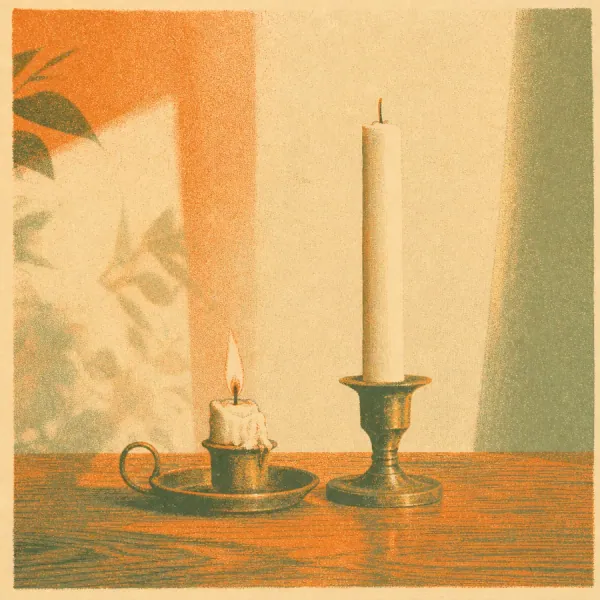
To burn out means to wear out, to become exhausted, under the weight of excessive demands. The image is that of a candle that has been burning for hours and now gives off only a tiny flame. Burnout, or occupational burnout, refers to a state of work-related exhaustion that is now described all over the world.
“A syndrome conceptualized as resulting from chronic workplace stress that has not been successfully managed,” characterized by three dimensions: “feelings of energy depletion or exhaustion; increased mental distance from one’s job, or feelings of negativism or cynicism related to one's job; and reduced professional efficacy.”
🔺 Three dimensions
- Exhaustion: feeling drained of energy, at the end of your rope, physically and emotionally.
- Mental distance: a cold detachment, negativity or cynicism toward your work and sometimes toward the people you care for. Researchers also call it “depersonalization.”
- Loss of efficacy: the feeling of no longer accomplishing anything worthwhile, of no longer being up to the job.
In France, the High Authority for Health (HAS), in a guidance sheet published in 2017, defines it as a “physical, emotional and mental exhaustion that results from prolonged investment in emotionally demanding work situations” (translated).
🏷️ A phenomenon, not a disease
This point is often misunderstood. For the World Health Organization (WHO), burnout is an “occupational phenomenon” and is not classified as a medical condition. It appears in the eleventh revision of the International Classification of Diseases (ICD-11), adopted in 2019 and in force since 2022, in the chapter on factors influencing health status or contact with health services. It was already listed in ICD-10, with a less detailed definition. The WHO also specifies that the term should apply only to the occupational context, not to other areas of life. The American Psychiatric Association's DSM-5-TR does not recognize it as a distinct mental disorder.
That doesn't mean burnout isn't “real”: the suffering is very much there, and it can come with health problems, such as depression or anxiety, which can be diagnosed and treated.
⚖️ Stress or burnout?
Stress is the body's response to pressure: it can be brief, even stimulating, and it subsides when the pressure goes away. Explorer's title “Stress” explains how it works, from adrenaline to cortisol. Burnout, by contrast, is the end point of work stress that drags on, that you can no longer manage, and that ends up draining a person's resources: their energy, their motivation and their self-esteem.
📜 How the idea was born
The word is recent, but the idea of exhaustion caused by work and modern life is much older.
⚡ An ancestor: neurasthenia
In 1869, the New York neurologist George Beard coined the word “neurasthenia” for an exhaustion of the nervous system that he blamed on life in “civilized,” intellectual societies. The notion became so popular in the United States that it was nicknamed “Americanitis.” In 2017, the Dutch psychologist Wilmar Schaufeli pointed out the similarities between this neurasthenia and today's burnout. In France, the psychiatrist Claude Veil described states of exhaustion at work as early as 1959. In 1961, the British novelist Graham Greene published A Burnt-Out Case, the story of an architect weary of his fame who goes to work in a leper colony in the Congo.
🏥 A free clinic in New York
In 1969, an American prison official, Harold B. Bradley, used the word burnout to describe the wear and tear on staff at a center for young offenders. But it was the psychologist Herbert Freudenberger who gave it its modern meaning. Born in 1926 in Frankfurt to a Jewish family, he fled Nazi Germany alone before becoming a psychologist in New York. In the 1970s, he volunteered at a free clinic for drug users on the Lower East Side, run by young volunteers.
He noticed that many of them, highly committed at first, lost all motivation after about a year, with physical symptoms: exhaustion, repeated colds, headaches, digestive problems, insomnia, irritability. In 1974, he described this phenomenon in the article “Staff Burn-Out.” The paradox he highlighted: it is often the most dedicated who fall into the trap. In 1980, with Geraldine Richelson, he published Burn Out: The High Cost of High Achievement, a book that became a classic, in which burnout is defined as a state of chronic fatigue, depression and frustration brought on by devotion to a cause, a way of life or a relationship that fails to produce the expected rewards, and that ultimately leads to less involvement and accomplishment at work.
📐 Christina Maslach and measuring burnout
At the same time, the American social psychologist Christina Maslach was studying how health care workers manage their emotions with patients. She found in them, and then in lawyers working with people in difficulty, the same exhaustion and the same distancing from the people they were helping. She described the phenomenon in 1976. Unlike Freudenberger, who emphasized personality, she located the causes mainly in working conditions.
In 1981, with Susan Jackson, she published the Maslach Burnout Inventory (MBI), a questionnaire that measures emotional exhaustion, depersonalization and personal accomplishment. It quickly became the most widely used tool in the world. First conceived for the helping professions, burnout was later extended to all occupations, and then to students.
The rest of the course
This page publishes the first 2 parts. The full course has 9: here is what the next ones cover.
- 🔥 Recognizing the signs
The physical, emotional, cognitive and behavioral signs of burnout, how gradually it sets in, and the limits of questionnaires.
- ⚙️ What fuels it
The causes and risk factors of burnout: a mismatch between person and job, Maslach's six areas, demands and resources, recognition, and individual factors.
- 🎓 Student burnout
Burnout applied to studying: definition, measurement tools, how common it is among students worldwide according to several meta-analyses, and its link with student mental health.
- 🧪 Burnout or depression? A scientific debate
Researchers' debate over whether burnout is distinct from depression, the lack of an agreed definition, and what this changes for the people affected.
- 🌍 A global phenomenon, different responses
Burnout and overwork around the world: karōshi in Japan, the 996 culture and “tang ping” in China, WHO and ILO estimates on long working hours, legal recognition in Europe and the right to disconnect.
- 🛟 Preventing, treating, returning
What we know about preventing burnout at the level of the organization and the individual, about treatment and recovery, and about returning to work.
- 🤝 Where to get help
When and whom to ask for help with exhaustion from work or school, in English-speaking countries, in France and elsewhere, including if you are having suicidal thoughts.
Study “Burnout” with flashcards and quizzes
In Oria, you read the full course, then practice on it: flashcards, multiple-choice quizzes, open questions or the Feynman method. Cards and questions then come back in your daily review, paced by spaced repetition.
Study this topic in OriaSources
These notes draw on the sources below. If a point seems doubtful, refer back to them.