Psychology & decisions
Creativity: Summary and Study Notes
How new ideas are born
Study this topic in OriaThe essentials
For a long time, creating was the business of gods and geniuses. Today, psychologists study creativity as an ability everyone has, to varying degrees. You'll discover how it is defined and measured, the stages that lead to an idea, what holds us back, what happens in the brain and what really helps you become more creative. You'll also see why the arrival of generative artificial intelligence reopens the question: what does it mean to create?
Key dates and facts
- 1908
- Poincaré's lecture on mathematical invention
- 1926
- Graham Wallas describes the stages of creation
- 1950
- Guilford's address launches the psychology of creativity
- 1971
- The Académie française adopts the word créativité
💡 What is creativity?
A recipe invented one evening from whatever was left in the fridge, a joke, a scientific theory, a symphony: all of these involve creativity. Psychologists may propose very different definitions (one geographer counted more than a hundred in the scientific literature), but they agree on a common core.
The ability to produce ideas or works that are both new and useful, or valuable, in a given context.
Both criteria matter. An idea that is only new may be absurd. An idea that is only useful may be banal. The psychologist Robert Sternberg sums up creativity as producing “something original and worthwhile.” It covers intangible products (ideas, theories, music, jokes) as much as tangible ones (inventions, dishes, jewelry, costumes, paintings).
🚀 Creating isn't yet innovating
Creativity is distinguished from innovation. For the researchers Teresa Amabile and Michael Pratt, creativity is producing new and useful ideas, and innovation is putting them into practice. The OECD and Eurostat take the same line: an innovation is not just an idea or an invention; it must be put to use or made available to others.
🔢 The “Four C” of creativity
Creativity isn't reserved for Leonardo da Vinci. The psychologists James Kaufman and Ronald Beghetto propose four levels:
- mini-c: the personal creativity of learning, when you give personal meaning to an experience or an idea you've discovered;
- little-c: everyday creativity, to solve a small problem or express yourself;
- Pro-C: the creativity of creative professionals, who aren't necessarily famous;
- Big-C: exceptional creativity that transforms a field.
The researcher Margaret Boden makes a related distinction: an idea can be new to the person who had it (“psychological” creativity) or new in all of human history (“historical” creativity). A student who rediscovers a math rule on their own is showing the first kind, even if the second is out of reach.
🧭 Four angles for studying it
Since the researcher Mel Rhodes, creativity has often been studied from four angles, the “four Ps”: the process (how an idea is born), the product (what makes a work creative), the person (traits, habits, motivation) and the press, or environment (the conditions that encourage or stifle it).
🏛️ From a gift of the gods to a human ability
Our modern idea of creativity, a human ability to bring forth something new, is recent. Most ancient cultures, including ancient Greece, China and India, had no such concept: they saw art as discovery rather than creation.
🏺 Antiquity: imitating and receiving inspiration
The ancient Greeks had no word for “to create” or “creator,” apart from the verb “to make,” reserved for poetry and the poet, literally “the one who makes.” In The Republic, Plato asks whether we would say a painter makes something, and answers: “Certainly not, he merely imitates” (translated). Inspiration came from elsewhere: the Muses passed on that of the gods, and Greeks and Romans invoked an outside spirit, the Greek daimon or the Latin genius, linked to the sacred.
In the Jewish, Christian and Muslim traditions, creation in the strong sense belongs to God alone; humans at best only express the divine work. This view dominated the West until the Renaissance, and even beyond.
🎨 The Renaissance: human creativity
With humanism, which puts human beings, their intelligence and their achievements at the center, creation began to be attributed to the abilities of great individuals. It was the age of universal minds, of whom Leonardo da Vinci is the most famous example. The shift was slow: in the 18th century, imagination became a key notion, notably for Thomas Hobbes, and William Duff made it the mark of genius, as opposed to mere talent.
🔬 The 20th century: an object of science
In the late 19th and early 20th centuries, scientists such as Hermann von Helmholtz (1896) and Henri Poincaré (1908) described publicly how their ideas had come to them. Their accounts inspired the first models of the creative process. In 1927, the philosopher Alfred North Whitehead made “creativity” a central category of his metaphysics: he is credited with coining the term in this sense. In France, the word caught on only later: the Académie française did not adopt it until 1971, after a heated debate between Louis Armand, who championed it, and André Chamson, who saw it as a pseudo-intellectual fad.
🌍 An idea that varies across cultures
Creativity isn't seen the same way everywhere. Research conducted in Hong Kong showed that Westerners tend to associate it with a person's individual qualities, such as aesthetic taste, while Chinese people judge it more by what creators contribute to society. A study of 28 African languages found that 27 of them had no word directly translating “creativity,” Arabic being the exception. There is no indication that this difference in vocabulary makes anyone more or less creative; Africa and Latin America also remain very little studied on this subject. Even among northern countries, nuances exist: in Scandinavia, creativity is seen as an attitude that helps people cope with life; in Germany, more as a process for solving problems.
The rest of the course
This page publishes the first 2 parts. The full course has 9: here is what the next ones cover.
- 🚌 The idea that strikes: preparation, incubation, illumination
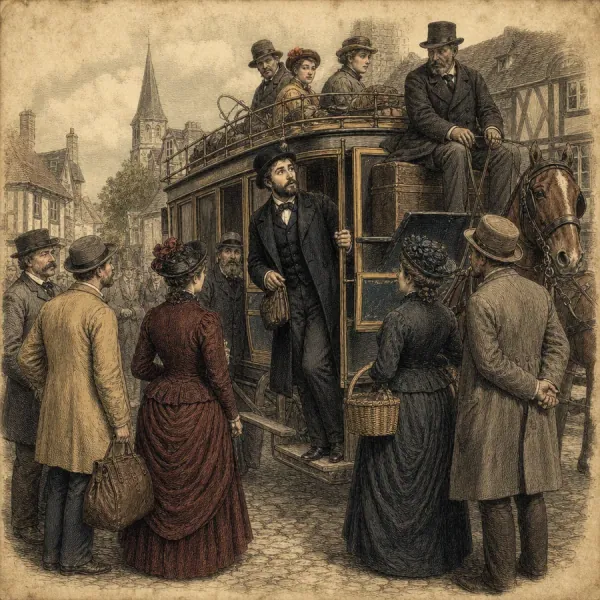
Poincaré's account (in his 1908 lecture) of the discovery that came to him as he stepped onto an omnibus, Graham Wallas's stage model (1926), and what research says about incubation and sleep.
- 🧱 Thinking wide, thinking right: divergent and convergent
The birth of the psychology of creativity with Guilford (1950), the distinction between divergent and convergent thinking, and creativity tests (uses of a brick, the Torrance tests, remote associates).
- 🕯️ Why we get stuck: fixedness and breakthrough
Duncker's candle problem (1935) and functional fixedness, the paradoxical effect of rewards, the “eureka” moment and its legend, from Archimedes' bathtub to Sultan the chimpanzee.
- 🧠 Creativity in the brain
What neuroscience says about creativity: the myth of the “creative right brain,” the cooperation of several networks including the default mode network, and the role of the frontal lobe and REM sleep.
- 🧑🎨 Who is creative? Personality, motivation, context
The traits associated with creativity (openness to experience), its link with intelligence (threshold theory), the role of expertise, intrinsic motivation (Amabile), emotions and constraints, and what is known about the link with mental health.
- 🛠️ Can you become more creative?
Alex Osborn's brainstorming and the limits revealed by research, the methods that work according to a review of 84 studies, and the debate over the place of creativity in school.
- 🤖 And machines: are they creative?
Computational theories of creativity, the arrival of consumer generative AI since 2022, and the debate over the difference between human creation and machine generation.
Study “Creativity” with flashcards and quizzes
In Oria, you read the full course, then practice on it: flashcards, multiple-choice quizzes, open questions or the Feynman method. Cards and questions then come back in your daily review, paced by spaced repetition.
Study this topic in OriaSources
These notes draw on the sources below. If a point seems doubtful, refer back to them.