Psychology & decisions
Maslow's Pyramid: Summary and Study Notes
The hierarchy of needs: a famous idea, often misunderstood and hotly debated
Study this topic in OriaThe essentials
In 1943, the American psychologist Abraham Maslow proposed that our motivations follow a hierarchy of needs, from the most vital to the highest. You'll discover who Maslow was, what his five levels of needs really say and how he imagined them working, a far cry from the rigid staircase often taught in class. You'll also see who invented the famous pyramid, why research has criticized it, what large international studies have kept of it, and how to use it wisely today.
Key dates and facts
- 1943
- The article “A Theory of Human Motivation”
- 1954
- The book Motivation and Personality
- 1960
- First pyramid, drawn by a consultant
- 2011
- Tay and Diener's study across 123 countries
🔺 An idea known all over the world
Few ideas from psychology have traveled the world as fast as Maslow's pyramid. You find it in management courses everywhere, in marketing textbooks, at universities, in training for health care, counseling and social work, and even in internet memes, where a “Wi-Fi” level is often added beneath the vital needs. Its message fits in a sentence: we first try to satisfy our most urgent needs, like eating or being safe, before we worry about love, esteem and then personal fulfillment.
📄 An article from 1943
The idea comes from an article published in 1943 in the American journal Psychological Review by the psychologist Abraham Maslow: “A Theory of Human Motivation.” In it he proposed a classification of the basic needs that drive human behavior, ranked by their strength, in what he called a hierarchy of “prepotency.” He then developed it in his book Motivation and Personality (1954, revised in 1970).
A theory of motivation according to which human needs form ordered groups: once a more basic need is reasonably satisfied, the next, “higher” need tends to become dominant and to steer behavior.
🌍 From companies to the United Nations
This model has become one of the most widely taught in the world, especially in management training, because it is simple and striking. It has also inspired public policy: according to the historian Chloé Maurel, the United Nations drew on it in the 1970s when it adopted the concept of “basic needs,” seeking to guarantee everyone food, housing, clothing and health, and even culture and education.
❓ The questions in this chapter
Yet behind this success lie several surprises. Maslow never drew a pyramid. He himself stressed how flexible his hierarchy was, far from a staircase you climb step by step. And scientific research has seriously questioned the order he proposed, while confirming some of his intuitions. This chapter tells who Maslow was, what he actually wrote, how his idea was transformed, and what studies carried out in dozens of countries say about it.
👤 Abraham Maslow, a Brooklyn kid
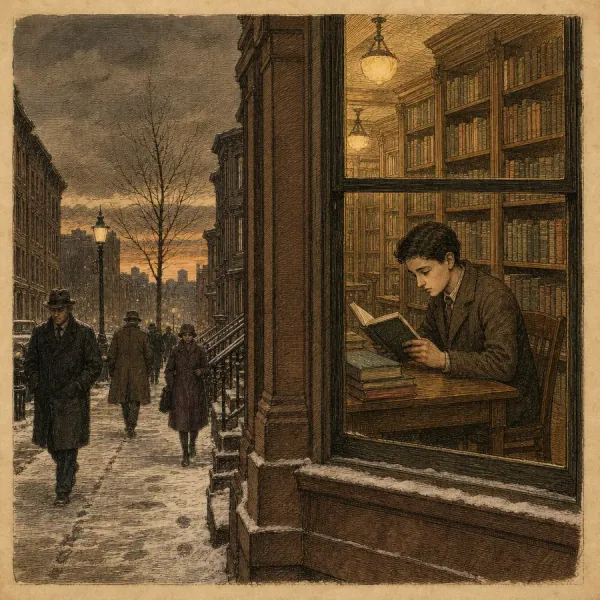
Abraham Harold Maslow was born on April 1, 1908, in Brooklyn, New York. He was the eldest of seven children. His parents were Jewish immigrants from Kyiv, then part of the Russian Empire, who had fled tsarist persecution. They were poor and not very intellectual, but they placed great value on education. In his working-class neighborhood, young Abraham was sometimes chased by antisemitic gangs who threw stones at him. His relationship with his mother was very bad, and he had few friends: he grew up in libraries, surrounded by books.
🎓 A bumpy education
A brilliant student at Boys High School in Brooklyn, he began studying at City College of New York, tried law school at night and dropped it almost immediately, spent a single semester at Cornell University, then left to study psychology at the University of Wisconsin. In 1928, he married his cousin Bertha. His training at the time was strongly behaviorist, that is, focused on the experimental study of observable behavior. Among other things, he worked on dominance and sexuality in monkeys, and earned his master's degree in 1931.
🧭 Mentors who changed his outlook
At Columbia University, he found a new mentor in Alfred Adler, a former associate of Freud. In 1938, he spent a research stay with the Blackfoot (Siksika Nation) in southern Alberta, Canada. Struck by their peaceful, cooperative way of life, he concluded that human aggression is largely cultural, a reaction to thwarted basic needs. From 1937 to 1951, he taught at Brooklyn College. Two colleagues deeply impressed him: the anthropologist Ruth Benedict and the Gestalt psychologist Max Wertheimer. He began taking notes on these “wonderful human beings”: this was the starting point of his research on fulfilled people. World War II, in which he could not serve because he was already the father of two children, strengthened his desire to understand what makes humans better.
🌱 The father of humanistic psychology
A professor at Brandeis University from 1951 to 1969, Maslow became one of the leading figures of humanistic psychology, along with Carl Rogers. While most psychologists of his time studied illness, neuroses and disorders, he wanted to understand mental health and human potential, and refused to treat people as a “bag of symptoms.” In 1961, he co-founded the Journal of Humanistic Psychology. He then became interested in “peak experiences,” those intense moments of joy and harmony, and in the 1960s took part in the birth of transpersonal psychology. He is also credited with a famous saying, “Maslow's hammer”: if all you have is a hammer, everything starts to look like a nail. He served as president of the American Psychological Association in the late 1960s. After a serious heart attack in 1967, he died of another one while jogging, on June 8, 1970, in Menlo Park, California. He was sixty-two.
The rest of the course
This page publishes the first 2 parts. The full course has 8: here is what the next ones cover.
- 🧱 The five basic needs
The five groups of needs Maslow described in 1943: physiological, safety, love and belonging, esteem, and self-actualization, with examples and the famous line “What a man can be, he must be.”
- ⚙️ How the hierarchy works, according to Maslow
The mechanism Maslow imagined: prepotency, the role of satisfaction, deficiency needs, partial and gradual satisfaction, multiple and unconscious motivations, the freedoms that are preconditions, and the exceptions he himself acknowledged.
- 📐 Who drew the pyramid?
Maslow never presented his theory as a pyramid: the image comes from a consultant, Charles McDermid, in 1960, and took hold in management at the cost of misreadings; Maslow, for his part, enriched his theory with the need to know, peak experiences and self-transcendence.
- 🔍 What research holds against the hierarchy
The main scientific criticisms: a lack of data, a 1976 review, a subjective method and selection bias, Western cultural bias (Hofstede, collectivist societies, studies in the Middle East and Asia), the Blackfoot perspective, the place of sex, and variations with age.
- 🌍 What recent studies say
Tay and Diener's study across 123 countries (2011), which confirms that needs are universal but not their strict order, the “renovated” pyramid of Kenrick and colleagues (2010) based on evolution, and other models of motivation.
- 🧭 Using the hierarchy of needs wisely today
Current uses of the hierarchy in business, marketing, education and social work, and a few rules for using it without misreadings: a tendency rather than a law, simultaneous needs, cultural variations, a tool for asking questions.
Study “Maslow's Pyramid” with flashcards and quizzes
In Oria, you read the full course, then practice on it: flashcards, multiple-choice quizzes, open questions or the Feynman method. Cards and questions then come back in your daily review, paced by spaced repetition.
Study this topic in OriaSources
These notes draw on the sources below. If a point seems doubtful, refer back to them.