Entrepreneurs & innovators
Ratan Tata: Biography and Study Notes
The discreet industrialist who made the Tata Group a global giant
Study this topic in OriaThe essentials
Ratan Tata was born in 1937 in Bombay into India's most famous industrial dynasty. An architect trained in the United States, he started out on the floor of a steel mill, then led the Tata Group from 1991 to 2012 and turned it into a global conglomerate by buying Tetley, Corus and Jaguar Land Rover. You'll follow his life step by step: his successes, his failed bets such as the Nano, the “world's cheapest car,” the land disputes and the succession battle with Cyrus Mistry. You'll also discover why this modest man, who died in 2024, never ranked among the world's greatest fortunes: most of the group belongs to charitable foundations.
Key dates and facts
- 1962
- Joins the group, in Jamshedpur
- 1981
- Chairman of Tata Industries
- 1991
- Chairman of Tata Sons and of the group
- 1998
- Launch of the Tata Indica
- 2008
- The Nano is unveiled on January 10
- October 3, 2008
- Withdrawal from the Singur plant
- 2014
- Zero stars in Global NCAP crash tests
- 2018
- End of Nano production
🏙️ A Parsi child in Bombay
Ratan Naval Tata was born on December 28, 1937, in Bombay (now Mumbai), then the capital of the Bombay Presidency in British-ruled India, the Raj. He belonged to the Parsi community, Zoroastrians whose ancestors fled Persia more than a thousand years ago to settle on India's west coast. The Parsis are few in number, but they have played an enormous role in Bombay's commerce and industry.
🏭 An industrial dynasty
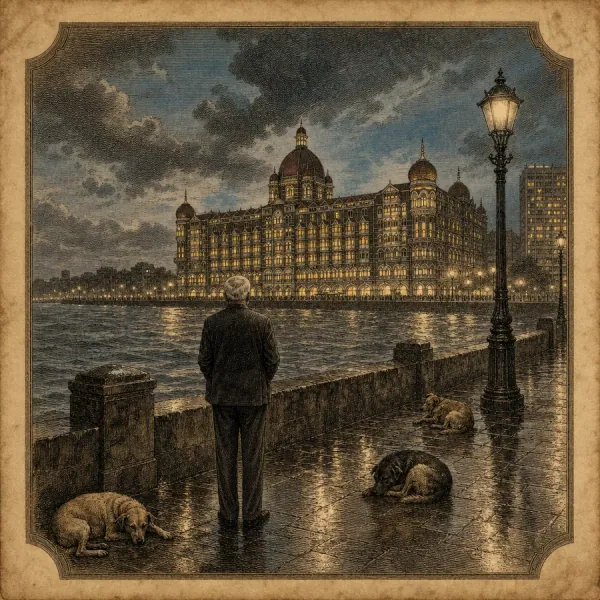
The Tata name already carried great weight. His great-grandfather, Jamsetji Tata, had launched the family business in the 19th century; the group dates its founding to 1868. Jamsetji pursued four great dreams: a steel mill, a prestigious hotel, a major scientific institution and hydroelectric power. The Taj Mahal hotel opened in Bombay in 1903, the Tata Iron and Steel Company (the future Tata Steel) in 1907, and the Indian Institute of Science in Bangalore welcomed its first students in 1911. In 1938, when Ratan was one year old, his relative JRD Tata took the helm of the group, which he would lead for more than half a century.
Ratan's family tree is a little complicated. His father, Naval Tata, born in Surat, had been adopted by Ratanji Tata, one of the founder's sons, and his wife Navajbai. His mother's name was Soonoo.
👵 Raised by his grandmother
His parents separated when he was a child, at about seven according to The Guardian, at about ten according to other sources. With his younger brother Jimmy, Ratan was then raised by his grandmother, Lady Navajbai Tata, in a large family mansion in central Bombay. His father remarried, to the Franco-Swiss Simone Dunoyer, with whom he had a son, Noel, Ratan's half-brother. Ratan attended Campion School and then the Cathedral and John Connon School in Bombay. He had to learn the piano, he recalled, and played a lot of cricket.
“She was very indulgent, but also quite strict in terms of discipline. We were very protected, although we didn't have many friends.”
Ratan Tata on his grandmother, interview with Business Week, quoted in The Daily Telegraph (2008)
📐 An architect in America
At 17, young Ratan Tata left for New York, where he finished high school at Riverdale Country School in 1955. He then entered Cornell University in Ithaca, New York. He began by studying engineering before switching to architecture, his true passion. Sources disagree on the year he graduated: 1959 according to The Guardian, 1962 according to Wikipedia.
🌴 The American dream
After graduating, he worked in Los Angeles for an architecture firm, Jones & Emmons. According to The Daily Telegraph, he was so taken with the dynamism of American life that he considered staying, and was even offered a job at IBM. The family conglomerate, dominated by committees of elders, seemed distant and unappealing to him. He said so later: at the time, he had no intention of returning to India.
🏠 Family duty
It was his grandmother who changed everything. Ailing, Navajbai, the woman who had raised him, asked him to come back. Ratan yielded to his sense of family duty and returned to Bombay at the end of 1962. This decision, made out of loyalty more than ambition, would shape his entire life. He nonetheless kept from his American years an international outlook and a lasting fondness for U.S. universities, to which he would later give considerable sums.
The rest of the course
This page publishes the first 2 parts. The full course has 9: here is what the next ones cover.
- 🔥 On the steel mill floor
Joining the Tata Group in 1962, training at the Jamshedpur steel works, turnaround missions at Nelco and in textiles, the Harvard program in 1975, the chairmanship of Tata Industries in 1981 and his selection by JRD Tata in 1991.
- 🧭 1991: bringing order to an empire
Taking over in the midst of India's economic liberalization, the fight against the subsidiary barons, a retirement age, fewer companies and fewer employees, a refocus on brands and the launch of the Indica.
- 🌍 Taking on the world: Tetley, Corus, Jaguar Land Rover
The big overseas acquisitions: Tetley in 2000, the Anglo-Dutch steelmaker Corus in 2007, Jaguar Land Rover in 2008, their mixed results and the internationalization of revenue.
- 🚗 The Nano, the dream of a car for everyone
The one-lakh-rupee car project, its unveiling in 2008, the Singur land controversy in West Bengal, the move to Gujarat, the commercial failure, the safety problems and the end of production in 2018.
- ⚖️ Criticism and gray areas
The controversies of the Ratan Tata era: land conflicts (Singur, Kalinganagar), trucks sold to Myanmar's junta, the Radia tapes affair, public subsidies, the overpriced purchase of Corus and remarks about Britain.
- 🕊️ Retirement, a brief comeback and a succession war
Retirement in 2012 at 75, the choice of Cyrus Mistry, his ouster in 2016, Ratan Tata's interim chairmanship, the appointment of Natarajan Chandrasekaran, the legal battle and his work as a start-up investor.
- 🐕 Philanthropist, dog lover, and the end of a life
The gifts of the Tata Trusts and Ratan Tata (Cornell, Harvard, UC San Diego, research in India), his life as a bachelor, his love of dogs, his death on October 9, 2024, his state funeral and his will.
Study “Ratan Tata” with flashcards and quizzes
In Oria, you read the full course, then practice on it: flashcards, multiple-choice quizzes, open questions or the Feynman method. Cards and questions then come back in your daily review, paced by spaced repetition.
Study this topic in OriaSources
These notes draw on the sources below. If a point seems doubtful, refer back to them.